Why Quality Control Matters in PV Manufacturing
The rapid global deployment of solar photovoltaics (PV) has made solar modules one of the most widely manufactured energy technologies in the world. As demand increases, maintaining strict control over the manufacturing process becomes essential—not only to ensure product quality, but also to protect long-term performance, financial returns, and brand reputation. Given that solar modules are expected to operate reliably for 25–35 years, even small deviations during production can have significant technical and economic consequences.
This article explores long term reliability & Performance as a reason why controlling the manufacturing process for solar modules is critical. In the previous article, Long-Term Reliability and Performance was discussed. This article evaluates further other factors.
Maintaining Power Output Consistency
Module power rating determines revenue generation in both utility-scale and distributed solar projects. Developers and investors rely on nameplate ratings and performance guarantees when modelling energy yield and financial returns.
Inconsistent manufacturing can lead to:
- Variations in cell binning
- Mismatched strings
- Higher series resistance
- Reduced fill factor
Even a 1–2% deviation in average module power can significantly impact the Internal Rate of Return (IRR) of large-scale projects.
Tight statistical process control (SPC), in-line electroluminescence (EL) inspection, flash testing, and IV curve verification ensure modules meet declared wattage and efficiency specifications.
Reducing Warranty Claims and Financial Risk
Most manufacturers provide:
- 10–15 year product warranties
- 25–30 year performance warranties
Warranty provisions represent substantial financial liabilities. Poor manufacturing control increases the probability of:
- Early power degradation
- Field failures
- Large-scale product recalls
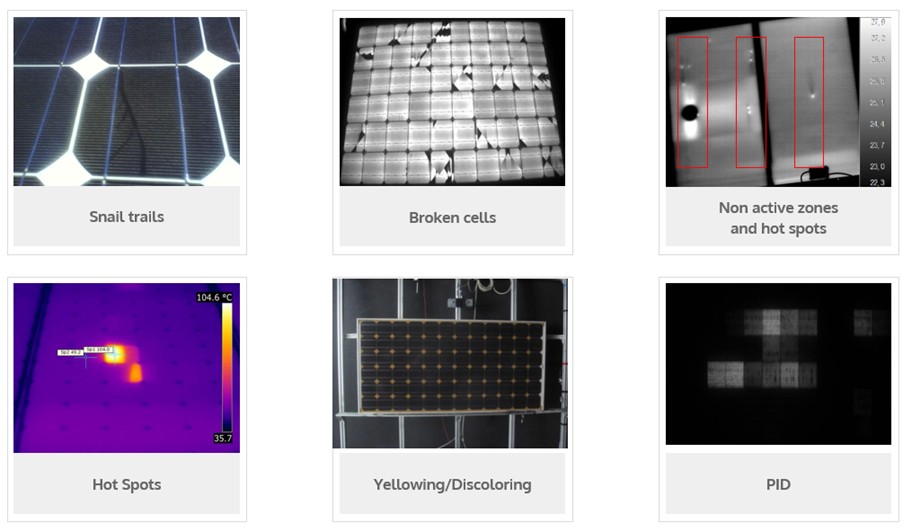
Several high-profile module failures in the past have been linked to manufacturing defects such as poor encapsulant quality or backsheet degradation. These failures can lead to massive replacement costs and legal disputes.
Strong process control reduces:
- Defect rates
- Return rates
- Long-term warranty exposure
It also strengthens bankability assessments during due diligence for financing and M&A transactions.
Controlling the manufacturing process for solar modules is not merely a quality assurance function, it is a strategic imperative. It directly influences:
- Long-term reliability
- Financial returns
- Warranty risk
- Bankability
- Cost competitiveness
- Regulatory compliance
Given the 25+ year lifespan expected of solar assets, manufacturing defects introduced in minutes can affect performance for decades. In a capital-intensive industry where investor confidence is paramount, disciplined process control, rigorous quality systems, and continuous improvement are foundational to sustainable success.
For manufacturers, developers, and investors alike, robust manufacturing control is not optional—it is the backbone of reliable solar energy deployment worldwide.
#CreatingABetterWorldInAChangingClimate #GreenEnco™ #PV #QualityMatters